AI-driven data centers create a significantly more dynamic electrical load profile than traditional facilities, requiring coordinated engineering across on-site generation, energy storage, and the utility-grid interface.
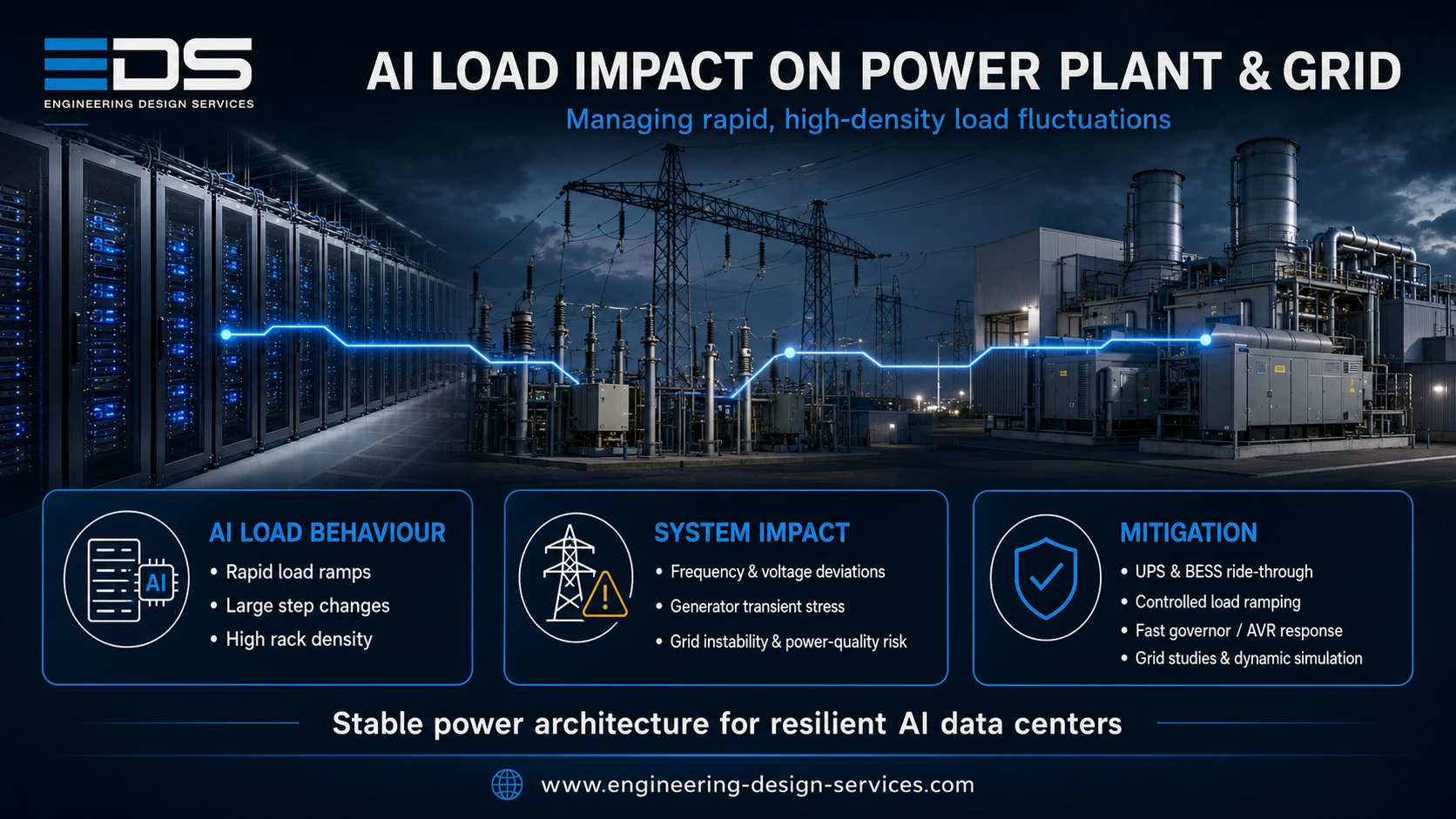
AI Load Behaviour
High-density GPU clusters can introduce rapid load ramps, substantial step changes, and frequent fluctuations as computing workloads are initiated, scaled, or completed. These changes can occur within seconds and may affect both the on-site power plant and the connected utility network.
Impact on the Electrical Infrastructure
Rapid AI load variations can cause temporary voltage and frequency deviations, increase transient stress on generators, transformers, and switchgear, and affect overall power quality. During island operation, generators may experience difficulties maintaining stable frequency and voltage if the load change exceeds their transient-response capability. When operating in parallel with the utility grid, repeated fluctuations may also influence the grid connection, protection settings, reactive-power control, and agreed operating limits.
Mitigation Measures
A resilient AI data-center power architecture requires coordinated mitigation across the complete electrical system. Key measures include UPS and battery energy storage systems for immediate ride-through and load smoothing, controlled workload ramping, adequate spinning reserve, staged load acceptance, and fast-response generator governor and automatic voltage regulator settings. Power-quality monitoring, protection coordination, grid-interface studies, and transient and dynamic simulations are also essential for validating system performance under credible operating scenarios.
The EDS Engineering Approach
EDS – Engineering Design Services supports clients in identifying and mitigating AI-related electrical risks from the early design stages through detailed engineering and technical coordination. Our approach includes:
- AI load-profile and load-step assessment
- Power-system modelling and dynamic simulation
- Utility-grid interface and compliance studies
- Generator transient-response evaluation
- UPS and battery energy storage integration
- Spinning-reserve and staged-load strategies
- Protection, control and power-quality coordination
- Technical alignment with utilities and equipment manufacturers
By evaluating the interaction between AI workloads, UPS systems, battery storage, generators, and the utility grid, EDS develops stable, resilient, and future-ready power solutions for high-density AI data centers.
Share this article
Share on LinkedIn